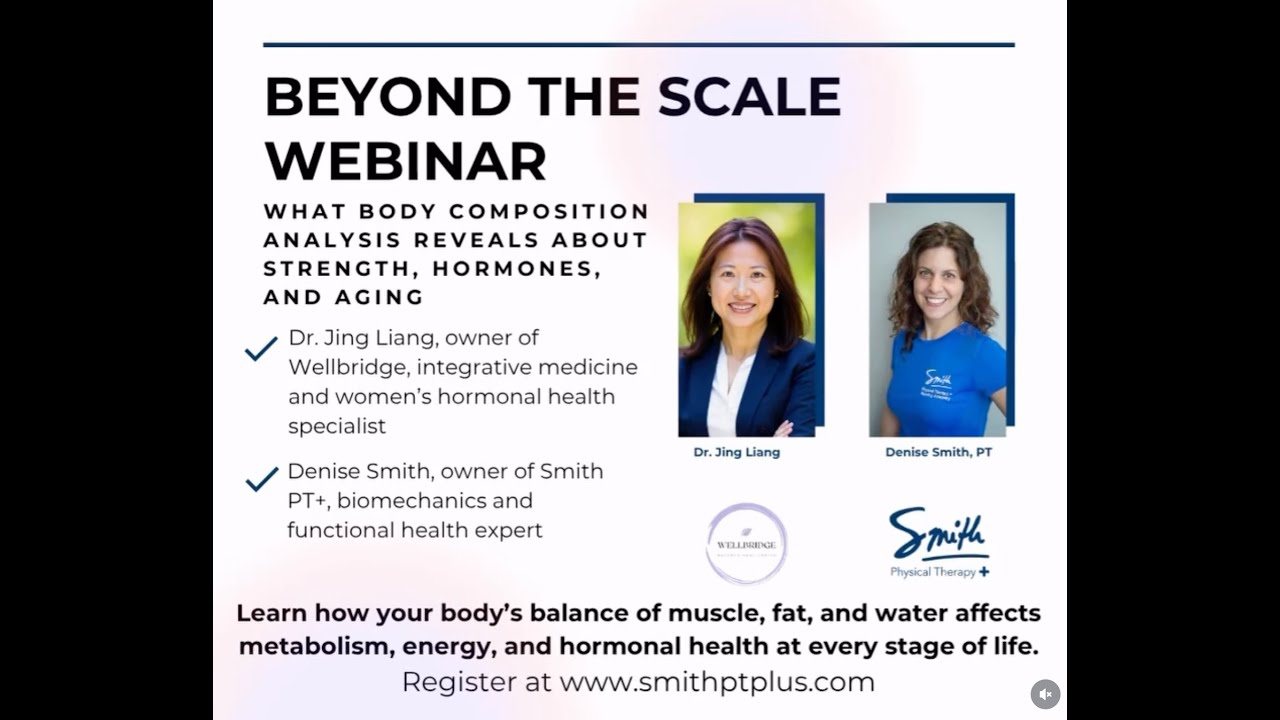
For many women, the scale has been one of the main ways they measure their health. It is simple, familiar, and easy to track. Over time, it becomes the number we rely on to tell us if we are doing well or falling behind. But during perimenopause and menopause, that number often stops being as helpful as we think.
This is one of the most frustrating parts of the transition. Many women feel like they are doing the same things they have always done. They are exercising, trying to eat well, and paying attention to their health, but their body feels different. Weight may start shifting toward the midsection. Recovery after workouts feels slower. There is more stiffness, more fatigue, and sometimes more pain. The scale may barely move, yet clothes fit differently and the body feels less efficient.
This is where body composition becomes much more important than body weight.
Two women can weigh the exact same amount but have very different body compositions. One may have higher muscle mass, lower visceral fat, better hydration, and stronger metabolic health. The other may have lower muscle mass, more fat stored around the organs, more inflammation, and poorer recovery. On paper, the weight is the same, but physiologically they are very different.
That is what the scale misses.
This becomes especially important during perimenopause and menopause because hormones are shifting. Estrogen and progesterone fluctuate and eventually decline. Those changes affect much more than reproductive health. They affect how we build and maintain muscle, how we store fat, how we regulate blood sugar, and how we recover from stress.
One of the biggest changes that happens during this time is muscle loss.
Muscle is not just about strength or appearance. It is one of the strongest drivers of metabolism. It helps stabilize blood sugar, supports joint function, protects bone density, and gives the body a reserve for healing and recovery. When muscle mass declines, many women start noticing they feel more tired, less stable, and more inflamed. They may gain weight even though their habits have not changed much.
That is because less muscle means the body is simply not using energy the same way.
This is also why so many women feel frustrated when they rely mostly on cardio. Cardio is important for heart health and stress management, but it does not fully protect against muscle loss. If the goal is long-term strength, metabolic health, and bone protection, resistance training becomes essential.
This is one of the most important shifts in midlife.
A lot of women are afraid to lift heavier weights, but this is often exactly what helps the body adapt better. Stronger muscles pull on bone, which stimulates bone growth and helps protect against osteoporosis. This matters because bone loss accelerates after menopause, and once it is lost, rebuilding it becomes much harder.
Muscle also acts as one of the body’s biggest storage sites for glucose. More muscle means better blood sugar regulation, fewer spikes and crashes, and often fewer cravings. That directly affects energy, fat storage, and long-term metabolic health.
Protein becomes just as important.
Many women are under-eating protein, especially during this phase of life. Protein is necessary not only for muscle but for tissue repair, immune function, hormone production, and recovery. If someone is trying to preserve muscle while eating too little protein, the body does not have the building blocks it needs.
Sleep also becomes a major factor.
Poor sleep affects cortisol, blood sugar regulation, appetite, and recovery. Many women in perimenopause notice lighter sleep, more waking, and less restorative rest. That alone can make it harder to maintain muscle, regulate cravings, and recover from exercise.
And then there is cortisol.
Cortisol itself is not bad. It is part of a healthy stress response. But when stress becomes chronic, the body starts shifting resources. High cortisol affects blood sugar, sleep, fat storage, and the balance of sex hormones. Over time, it becomes harder for the body to recover and easier for inflammation to build.
This is why health in midlife needs a wider lens.
It is not enough to ask what the scale says. We have to ask how much muscle is being maintained, where fat is being stored, how the body is handling inflammation, whether recovery is adequate, and whether the nervous system is getting enough support.
This phase of life asks for a different approach.
What worked in your 20s and 30s may not work the same way now, and that does not mean you are doing something wrong. Your physiology is changing. Hormones shift, muscle becomes harder to maintain, recovery takes longer, and stress carries a different weight on the body.
That is why it becomes so important to stop looking at health through just one number.
The scale does not tell you if you are losing muscle. It does not tell you if your body is holding onto inflammation. It does not tell you if your stress is affecting your recovery, your sleep, or your ability to build strength.
Those are the things that matter.
The goal is not to fight your body through this transition. It is to understand what it needs now.
For some women, that means eating more protein. For others, it means lifting heavier than they ever have. Sometimes it means sleeping more, slowing down, or paying attention to stress in a way they never had to before.
None of this is about perfection.
It is about learning how to work with your body instead of against it, so you can keep moving, keep getting stronger, and keep feeling like yourself as you move into the next stage of life.