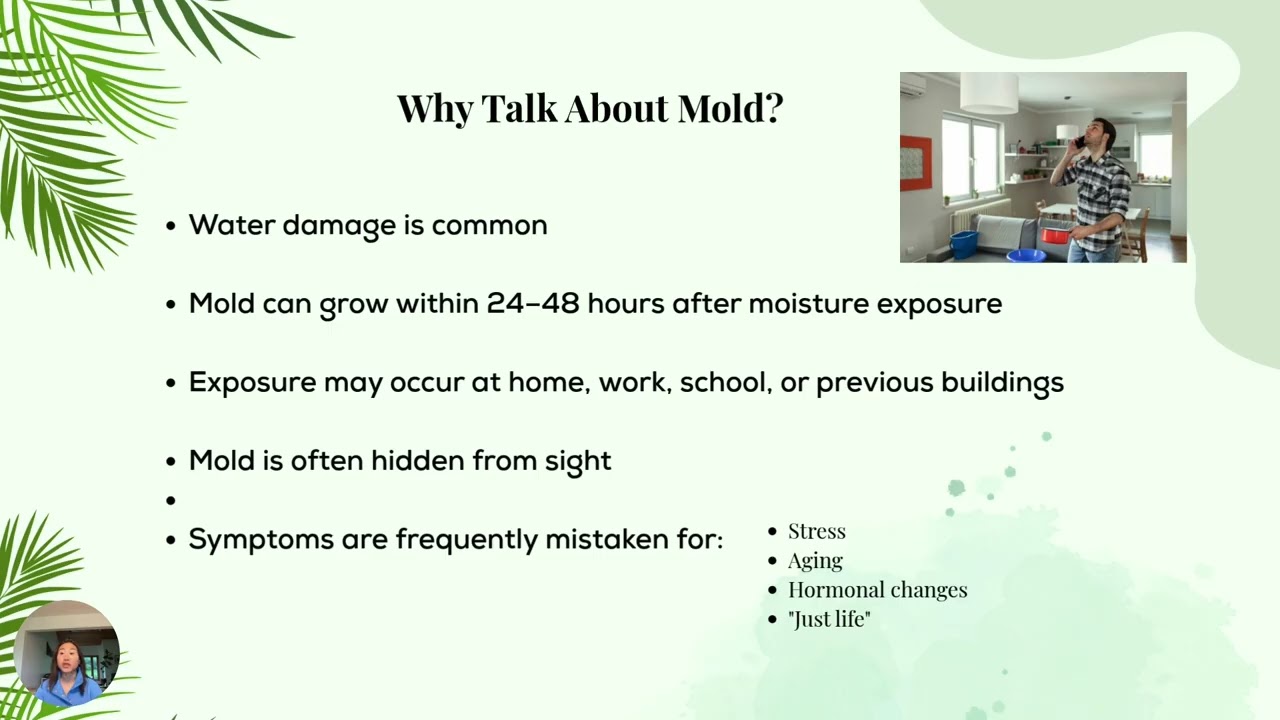
When people think about mold exposure, they usually think about allergies, congestion, asthma, or maybe a musty smell in the basement. Most assume that if mold were present, they would see it or smell it. But in reality, mold is often much less obvious than that. It can hide behind drywall, under flooring, inside crawl spaces, attics, or within HVAC systems. Sometimes it sits there for years before anyone realizes it.
What makes mold even more difficult is that when it affects health, the symptoms often do not show up all at once. They can develop gradually over time. A person may notice more fatigue than usual, slower recovery after exercise, worsening sleep, more brain fog, increasing food sensitivities, skin changes, or worsening allergies. Because these changes happen slowly, they are often blamed on stress, aging, hormones, or simply having too much going on.
Sometimes those explanations are true. But sometimes there is something else underneath.
This topic became personal for me several years ago. I noticed a gradual decline in my own health. My exercise recovery was not the same. My energy changed. My mood felt different. Things that had always helped me stay resilient no longer seemed to work. Then I developed a significant skin condition that kept worsening, and at the same time my liver enzymes became abnormal. I saw specialists and tried different treatments, but no one could really explain why it was happening.
Eventually, we discovered hidden water damage in our home. The roof had been leaking for years, and there was mold behind multiple walls in different rooms. Like many Midwestern homes, there were also issues with humidity, ventilation, and moisture accumulation. The damage was significant enough that my family and I had to move out for three months while remediation was completed.
What struck me most was realizing that this was not one single event. It was the accumulation of multiple factors over time. The environment, the moisture, the ventilation, and ultimately how my body was responding to those exposures.
That experience changed how I looked at patients.
Over time, I started seeing similar patterns in people who were doing many of the “right” things. They were eating well, exercising, taking supplements, and following through with treatment plans, yet they still were not recovering the way I expected. Their symptoms did not always fit neatly into one diagnosis. They felt inflamed, depleted, or less resilient than before.
That does not mean mold is always the answer. It certainly is not. But sometimes it is part of the picture, and it is often overlooked.
One of the most important things to understand is that mold affects people differently. Two people can live in the same house and have completely different experiences. One person may feel relatively fine, while another develops significant symptoms. This is where the concept of total body burden becomes important.
Most people are not carrying just one stressor. They are carrying many. Poor sleep, chronic stress, hormonal changes, nutrient deficiencies, previous infections, emotional strain, and ongoing inflammation all add up. At some point, the body reaches a threshold where it can no longer compensate the way it used to.
Mold can act like one more stressor on top of an already overloaded system.
For some people, the immune system takes the hit. They may develop chronic sinus congestion, worsening allergies, histamine reactions, or skin issues. For others, it may affect energy production and the nervous system more. They feel wired but exhausted. Their sleep becomes lighter and less restorative. They feel mentally foggy and less able to handle stress.
What often catches my attention is not one symptom but a pattern across multiple systems. When someone has fatigue, brain fog, poor recovery, sleep disruption, increasing sensitivities, and a body that feels more reactive than before, especially with a history of water damage or building exposure, it becomes worth asking whether the environment may be contributing.
That does not prove mold is the cause. It simply means it deserves consideration.
Testing can sometimes help, but there is no perfect test. Environmental testing can identify water damage or mold particles. Certain lab markers may suggest inflammation or immune activation. There are also screening tools that can provide additional clues. But no single test tells the whole story.
The history matters. The timing matters. The symptom pattern matters.
Often, that conversation is just as important as the testing itself.
If mold is part of the problem, the first step is usually not supplements. It is reducing the exposure. This may mean remediation, changing environments, improving air quality, or addressing hidden water damage. It can be a big process, and I know that personally.
But if the body is still being exposed, healing becomes much harder.
You cannot out-supplement an unhealthy environment.
Once the exposure is reduced, the focus shifts to helping the body recover. This is where sleep, nutrition, blood sugar stability, nervous system regulation, and reducing inflammation become so important. Sometimes histamine support is part of that process too. The goal is not simply to “detox mold.” The goal is to help the body rebuild resilience.
Resilience means the body can adapt, recover, and handle future stressors more effectively, whether those stressors are physical, emotional, environmental, or medical.
Mold is not the answer for everyone, and it should not be blamed for every symptom. But if your body feels different, your resilience is lower, and your symptoms do not fully make sense, it may be worth taking a broader look at both your health and your environment.
Sometimes the missing piece is not another medication or supplement. Sometimes it is understanding what the body has been carrying all along.